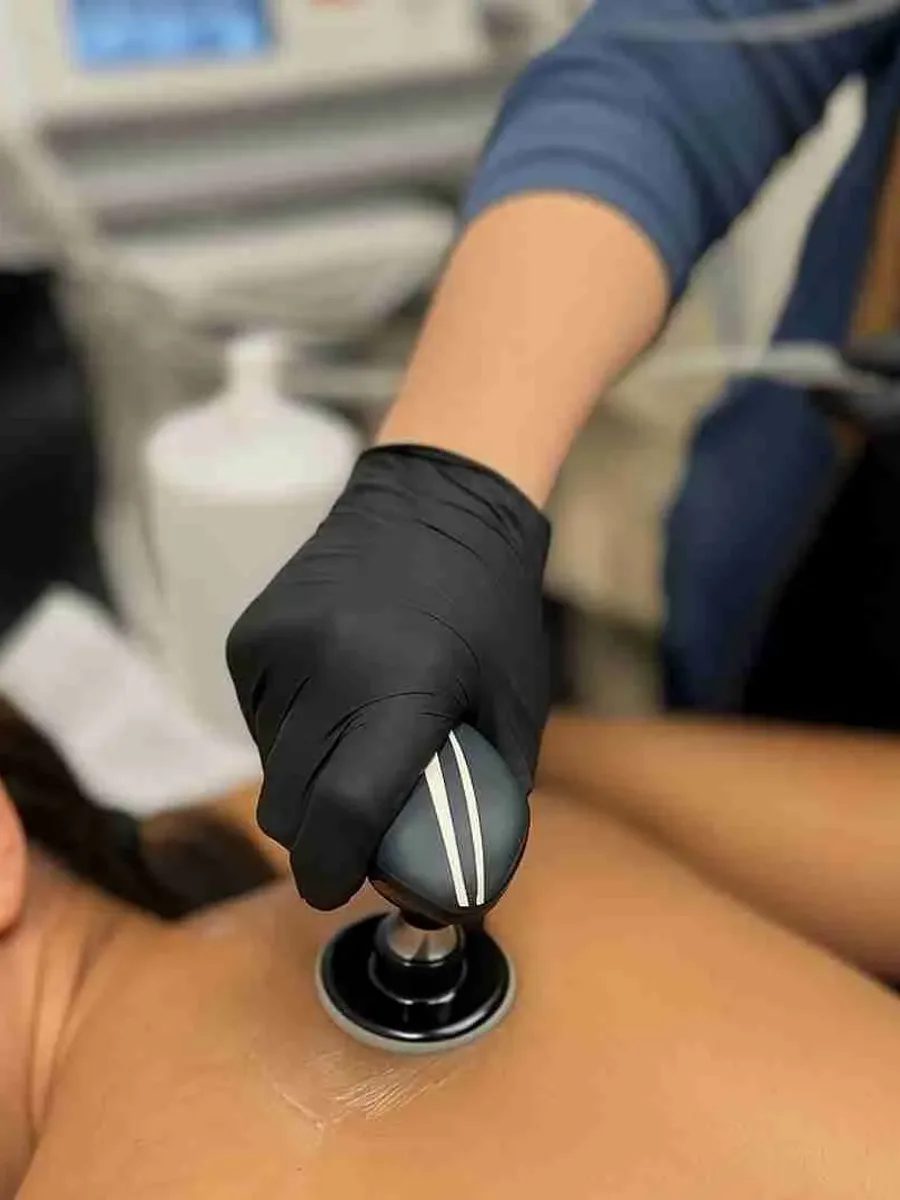
When recovery from an injury or an operation goes more slowly than you would like, the body sometimes needs extra support to set its own healing mechanisms in motion. That is precisely where INDIBA Tecar therapy helps, a modern method that uses radiofrequency energy to act deep within the tissue, reducing pain and swelling and speeding up regeneration. Below we explain how it works, what you will feel during the treatment and which complaints it delivers the best results for.
What INDIBA Tecar therapy is and how it works
Tecar stands for the transfer of energy through capacitive and resistive action (Transfer Energy Capacitive and Resistive). It is a form of radiofrequency therapy that warms the tissue from the inside, rather than delivering heat from outside. The INDIBA device works at a precisely defined frequency of 448 kHz, which years of research have identified as optimal for cellular activity and circulation.
What sets this frequency apart is the so-called proionic effect. The radiofrequency current encourages the movement of ions across cell membranes, which improves the exchange of substances within the tissue. This speeds up microcirculation, brings more oxygen and nutrients to the tissue, and carries away waste products and excess fluid more quickly. In this way INDIBA does not merely mask the symptoms, but creates the conditions in which the body can carry out its natural recovery process more easily and more quickly.
The device has two operating modes. The capacitive mode is directed at softer, more water-rich tissue, such as muscles and blood vessels, while the resistive mode works deeper, on the joints, tendons, ligaments and bones. The therapist chooses the mode and intensity according to your complaint, so the treatment is tailored to each patient individually.
What the patient feels during the treatment
What most patients are keenest to know is whether the treatment hurts. The answer is reassuring: INDIBA Tecar therapy is pleasant and non-invasive. The therapist moves the applicator across the skin while you feel a mild, agreeable warmth that gradually spreads through the tissue. Most people describe this sensation as relaxing, similar to a warm massage.
The intensity of the heat is adjusted to how you feel, so the treatment remains comfortable from start to finish. There is also a so-called athermal mode, with very gentle warming, which is used in the early stages after an injury or operation, when the tissue is still sensitive. A single treatment usually lasts between twenty and thirty minutes, and after just the first few sessions many patients feel relief and greater mobility.
Which complaints it helps with
Thanks to its twofold action on pain and regeneration, INDIBA is used for a wide range of conditions. The most common indications are:
- acute and chronic pain in the muscles, joints and spine
- swelling and a build-up of fluid after an injury or operation
- sports injuries, such as strains, sprains and muscle tears
- speeding up recovery after surgical procedures and the rehabilitation period
- inflammation of the tendons, tennis elbow and golfer’s elbow, inflammation of the Achilles tendon
- limited joint mobility and muscle stiffness
In sports rehabilitation, INDIBA is particularly valued because it allows a faster return to activity without skipping the necessary stages of recovery. In post-operative patients it helps to reduce swelling and ease pain, which opens the way to performing active exercises earlier and more easily.
Benefits and its place in the therapy plan
The main benefits of INDIBA Tecar therapy are that it is painless, that it acts deep within the tissue where conventional methods struggle to reach, and that it has a fast and noticeable effect on pain and swelling. The method is non-invasive, without medication and without any recovery time after the treatment, so you can return to your commitments straight away.
INDIBA delivers the best results when it is part of a broader plan. We often combine it with targeted exercises as part of physical therapy, and for stubborn tendon inflammation it pairs excellently with shockwave therapy. When swelling is pronounced, we also include lymphatic drainage in the plan to drain the tissue more quickly. Which combination will be the right one is decided by the therapist after an examination, because every injury and every body has its own story.
It is important to note that this text is for information only and does not replace an examination by a doctor or physiotherapist. If you have pronounced pain, swelling or limited mobility, it is best to come in for a professional assessment, so that we can tailor the therapy to your particular condition.
Would you like to check whether INDIBA Tecar therapy is the right solution for your complaints? Our team in Subotica is here to help you. Call us on 024/522-150 or book an appointment, and together we will draw up a plan that gets you back into shape more quickly.