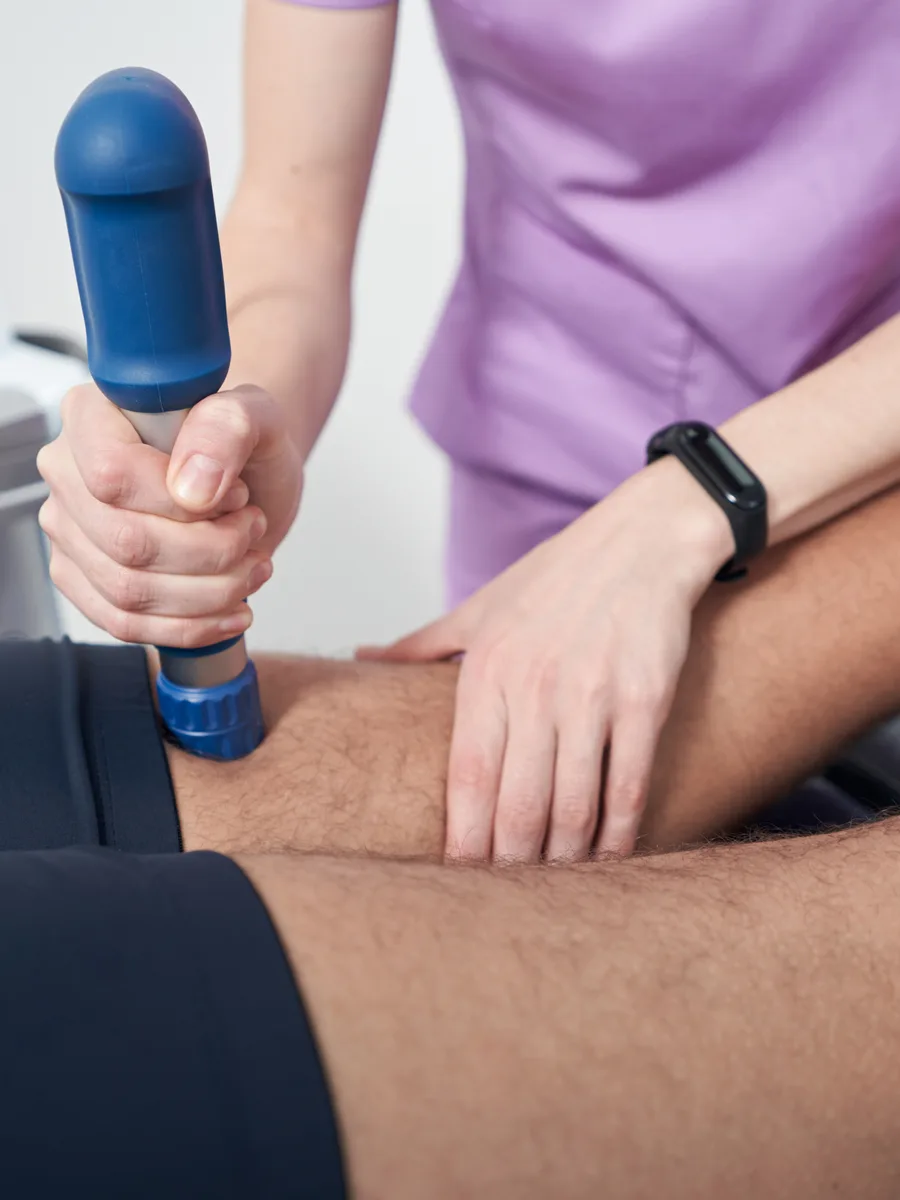
Heel pain with your first steps in the morning, persistent pain on the outer side of the elbow, or a tendon that simply will not heal for months. If you have tried rest, medication and conventional exercises but improvement is nowhere to be seen, shockwave therapy is a method worth getting to know. It is a modern, non-invasive therapy that acts precisely where the pain is and prompts the body to renew the damaged tissue itself.
What shockwave therapy is and how it works
Shockwave therapy uses high-energy acoustic (sound) waves that are delivered through a special applicator, passing through the skin to reach deeper structures, most often tendons, muscle attachments and sites where calcium builds up. At the treated area, these waves trigger controlled micro-stimulation of the tissue.
The effect is not merely instant pain relief. Shockwaves set in motion several processes in the body:
- Improved circulation and the formation of tiny new blood vessels at the site of injury, which speeds up the supply of nutrients.
- Kick-starting the healing process in chronic tendons that have reached a state in which inflammation does not resolve on its own.
- Breaking down calcifications, that is, the calcium deposits that interfere mechanically and cause pain.
- Reduced pain through an effect on the nerve endings and the surrounding muscle tone.
This is precisely why shockwave is often described as a therapy that does not mask the symptom but instead helps the body resolve the underlying cause of the problem. You can read more about the service itself and the device we use on the Shockwave therapy page.
Which conditions it helps
Shockwave therapy delivers the best results in chronic conditions of the tendons and attachments, in other words those complaints that last for weeks or months and do not respond to the usual measures. The most common indications are:
- Heel spur and plantar fasciitis: heel pain, especially with the first steps in the morning or after sitting for a long time.
- Tennis and golfer’s elbow: pain on the outer or inner side of the elbow that worsens when gripping and lifting.
- Calcifications in the shoulder: calcium deposits in the rotator cuff tendons that restrict movement and cause pain.
- Tendinopathies: chronic tendon damage, for example in jumper’s knee or the tendons around the hip.
- Problems with the Achilles tendon: pain and thickening in the region of the Achilles tendon, common in recreational athletes and runners.
- Painful spots and overuse of muscles that do not resolve for a long time.
For athletes and recreational sportspeople, shockwave is particularly valuable because it allows a chronic injury to be resolved without the break that a surgical procedure would require. This is why it is often part of a physical therapy and sports rehabilitation programme, where it is combined with exercises and other procedures.
What the treatment is like and what you feel
Before the first treatment, the therapist assesses your condition and pinpoints the painful spot precisely. A gel is applied to the skin to enable the waves to be transmitted, and the applicator is then placed against the treated zone. A single treatment is short, usually around 5 to 15 minutes, depending on the region and the number of points being worked on.
During the therapy, most patients feel a mild to moderate tapping or pressure, and sometimes brief discomfort at the most sensitive spots. The intensity is adjusted to your threshold of tolerance, so that the treatment remains bearable. After the therapy, temporary sensitivity or slight redness may appear in the treated zone, which usually subsides quickly.
The therapy is most often carried out as a series, as a rule three to five treatments, spaced from a few days to a week apart. Many people feel improvement after just the first few visits, but the full effect develops gradually over several weeks as the tissue completes the process of renewal.
Shockwave or INDIBA Tecar: when to choose which
Patients often ask us how shockwave differs from INDIBA Tecar therapy, since both are used for tendons and soft tissues. These are two different methods that complement each other nicely.
- Shockwave acts mechanically, through shockwaves, and is ideal for stubborn, pinpoint-localised problems such as heel spur, calcifications and chronic attachments.
- INDIBA Tecar uses radiofrequency energy that heats the tissue from within, speeds up cell metabolism and is suited to larger areas, muscle relaxation and faster regeneration.
In practice they are often combined within a single rehabilitation plan, and which method takes priority depends on the diagnosis, the duration of the complaints and your goals. That is why it is important that the choice of therapy is always guided by a professional assessment, and this text is not a substitute for a medical examination.
Contraindications: when shockwave is not advisable
Although it is safe and well tolerated, shockwave therapy is not for everyone. It is not recommended in the following situations:
- During pregnancy.
- In people with an implanted pacemaker or a similar electronic device, if a zone nearby is being treated.
- In cases of blood clotting disorders or when taking strong blood-thinning medication.
- Over areas with an acute infection, an open wound or a tumour process.
- Directly over growing bone zones in children and young people.
For this reason, every treatment at our clinic begins with a conversation and an assessment, so that we can be sure the therapy is both safe and effective for you. If you have chronic health complaints or are taking any medication, please be sure to let us know.
Book an assessment at REHABILITY
If you are troubled by persistent pain in the heel, elbow, shoulder or a tendon that will not go away, you do not have to wait for the condition to worsen. At the REHABILITY clinic in Subotica, which has been helping patients since 2006, we will assess your condition and suggest the therapy that suits you best, on its own or in combination with other procedures. Take a look at our other services too, or simply give us a call. To arrange an appointment, book an examination or get in touch on 024/522-150.