Every athlete, from the recreational player to the competitor, knows that unpleasant moment when the knee slips, the ankle rolls or the elbow hurts after the hundredth stroke. Sports injuries are part of the game, but the way you react in the first minutes and days determines how quickly and safely you return to the field. In this text we go through the most common injuries, first aid according to proven protocols and the role of physical therapy in recovery.
The most common sports injuries
Most injuries in sport fall into a few typical groups. Recognising the mechanism of injury helps in choosing the right approach to treatment.
- Sprains (distortions): overstretching or partial tearing of ligaments, most often at the ankle and knee, usually after a sudden twist or landing.
- Muscle strains (pulls): overloading or partial rupture of muscle fibres, typically of the hamstrings, groin or calf, often during sprinting.
- Tennis and golfer’s elbow: inflammation of the tendons on the outer (tennis) or inner (golfer’s) side of the elbow, resulting from repetitive movements and overuse.
- Knee injuries: from mild sprains to injuries of the meniscus and cruciate ligaments, common in football, basketball and skiing.
It is important to know that severe pain, pronounced swelling, instability of the joint or an inability to bear weight may point to a more serious injury. In such cases this text is not a substitute for a medical examination, but rather an encouragement to see a specialist as soon as possible.
First aid: RICE and the newer POLICE protocol
For acute soft-tissue injuries, the RICE protocol has been used for decades. It is an acronym describing four steps that you apply immediately, within the first 48 to 72 hours.
- R (Rest): rest and stopping the activity that caused the pain, so that the injury does not become worse.
- I (Ice): ice wrapped in a cloth, 15 to 20 minutes every 2 to 3 hours, to reduce swelling and pain.
- C (Compression): an elastic bandage that presses on the area evenly and limits swelling.
- E (Elevation): raising the injured part above the level of the heart, which helps drain fluid.
The modern approach develops RICE into the POLICE protocol, where the letters P and OL stand for Protection and Optimal Loading. The idea is that, after a short phase of rest, the tissue is loaded gradually and in a controlled way, because moderate activity encourages faster, better-quality healing than prolonged, complete rest. What optimal loading means for your particular injury is best assessed by a physiotherapist.
What to avoid in the first few days: heat, alcohol, intensive massage of the injured spot and pushing through training in spite of pain, as all of this can increase swelling and slow recovery.
How physical therapy speeds up the return to the field
Once the acute phase has passed, the aim is to restore full strength, mobility and stability, but also to prevent the same injury from happening again. This is where physical therapy makes the greatest difference. At the Rehability clinic we tailor the approach to the type of injury and the sport you take part in.
- Kinesitherapy is the foundation of sports rehabilitation: with targeted exercises we restore strength, range of movement and proprioception, which reduces the risk of a repeat injury.
- Shockwave therapy is particularly effective for chronic tendinopathies such as tennis and golfer’s elbow, as it stimulates tendon regeneration and reduces pain.
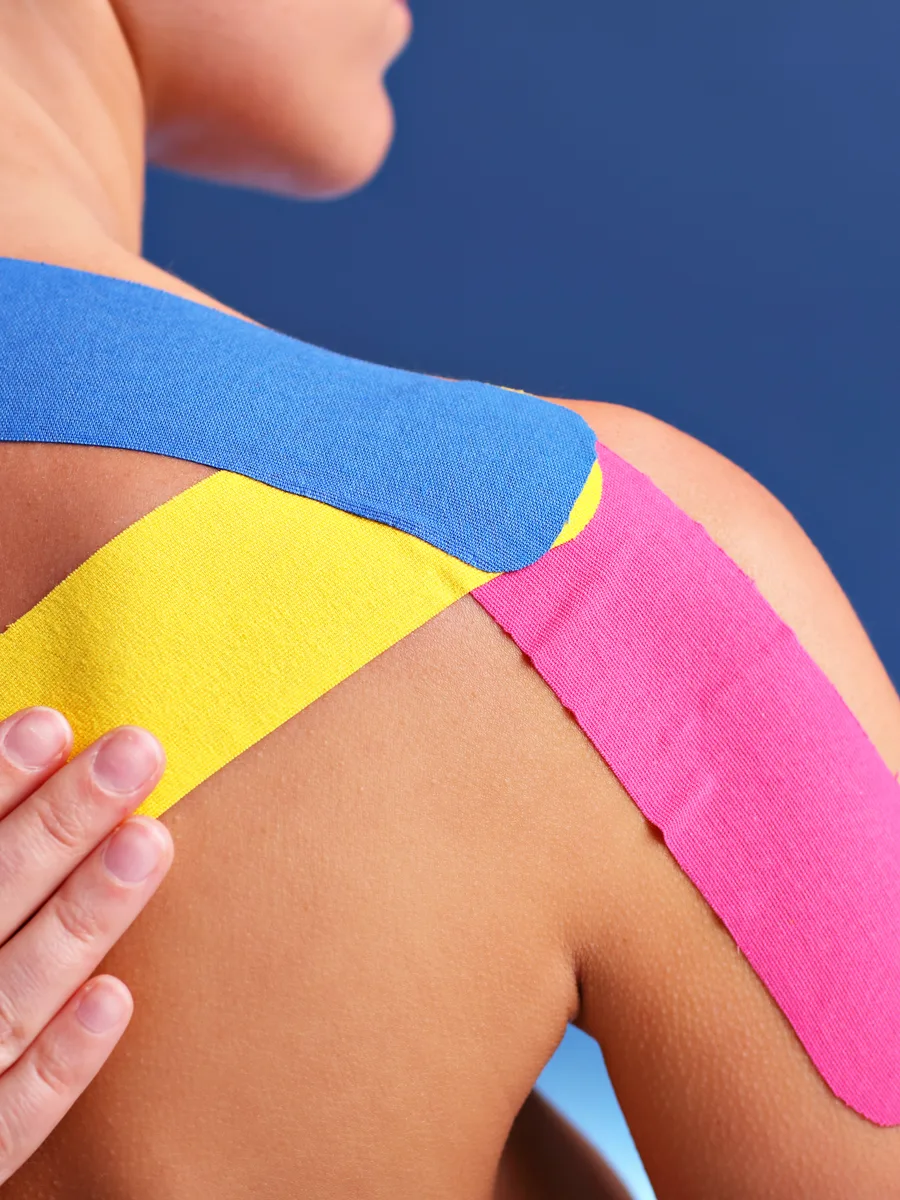
- Kinesio taping uses elastic tapes to support the muscles and joints, reduce swelling and allow controlled loading without restricting movement.
- Kinematic taping provides additional joint stabilisation during the return to activity, useful for ankle and knee sprains.
- Massages relax tense musculature, improve circulation and prepare the tissue for exercises.
The combination of these methods, together with a clear plan of progression, allows you to return to sport faster and more safely than when you rely on rest alone.
Prevention: the best injury is the one that never happens
A large proportion of sports injuries can be prevented by preparing the body well. A few habits bring the most benefit.
- A proper warm-up before and stretching after training.
- Gradually increasing the load, without sudden jumps in volume or intensity.
- Strengthening the stabilising musculature of the trunk, hips and ankle joint.
- Suitable footwear and equipment adapted to the surface and the sport.
- Enough sleep, hydration and rest between demanding training sessions.
We have been helping athletes from Subotica and the surrounding area through all of these steps since 2006, from risk assessment and prevention programmes to rehabilitation after injury and a safe return to competition.
Return to the field ready
If you are troubled by a fresh injury or a recurring complaint, do not wait for it to get worse. Our team will assess the condition and put together a recovery plan tailored to your sport and your goal. Book an examination or call us on 024/522-150, mob 064 286 2000, and get back to the game stronger than before.